Knife skills
Chop, dice, and julienne: what is the recipe actually asking for?
A practical guide to slicing, chopping, dicing, mincing, julienne, brunoise, and chiffonade, with safe ways to practise each cut.
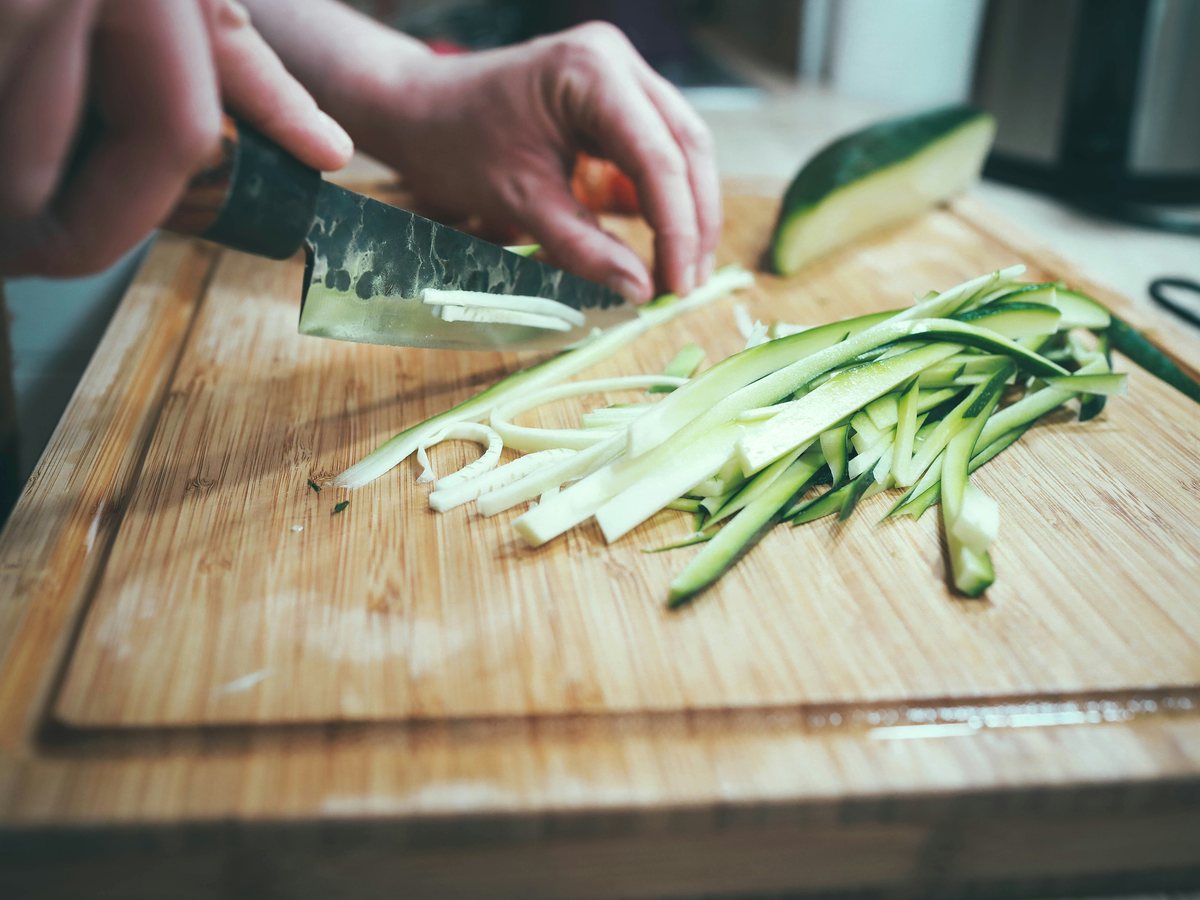
A recipe can sound wonderfully precise right up to the point where it tells you to “finely dice” an onion. Fine compared with what? And when it asks for a julienned carrot, is that just a more impressive way of saying “cut it into strips”?
There is a reason for the different words. The shape changes how an ingredient looks and feels in the finished dish, while the size affects how quickly it cooks. The cut also affects how a sauce coats the ingredient and whether the pieces stay distinct in the dish. If one piece of carrot is twice the size of the others, it will probably still be firm when its neighbours are soft. So the aim is to understand the cut and keep the pieces reasonably consistent. Nobody needs to measure every cube of onion before making dinner.
Here is a quick guide to the terms, followed by a few ways to make them with ingredients you probably already have.
The cuts at a glance
| Recipe term | What it looks like | Useful size guide | Where you might use it |
|---|---|---|---|
| Slice | Flat, parallel pieces | The recipe may say thin or thick | Cucumber for a salad; onion for a pan |
| Chop | Roughly even pieces, without a set shape | “Roughly” means larger; “finely” means smaller | Vegetables for soup; herbs for a garnish |
| Dice | Cubes | Small, medium, or large as the recipe specifies | Vegetables spread through a dish |
| Mince | Very small pieces | No set size | Garlic or shallots in a dressing or sauce |
| Julienne | Thin matchsticks | Fine, even matchsticks; Leiths uses 1–2 mm slices | Carrot or pepper for slaw or stir-fry |
| Brunoise | Tiny cubes cut from julienne strips | Tiny cubes cut across the matchsticks | A fine vegetable garnish |
| Chiffonade | Thin ribbons of leaves | No set width | Basil, mint, or leafy greens |
Culinary schools use precise cuts, but home recipes often use these words more loosely. If a recipe gives a measurement, follow it. Otherwise, focus on making the pieces a similar size. The Leiths guide to cutting carrots shows how batons, julienne, and dice are built from even cuts.
First, make the ingredient stable
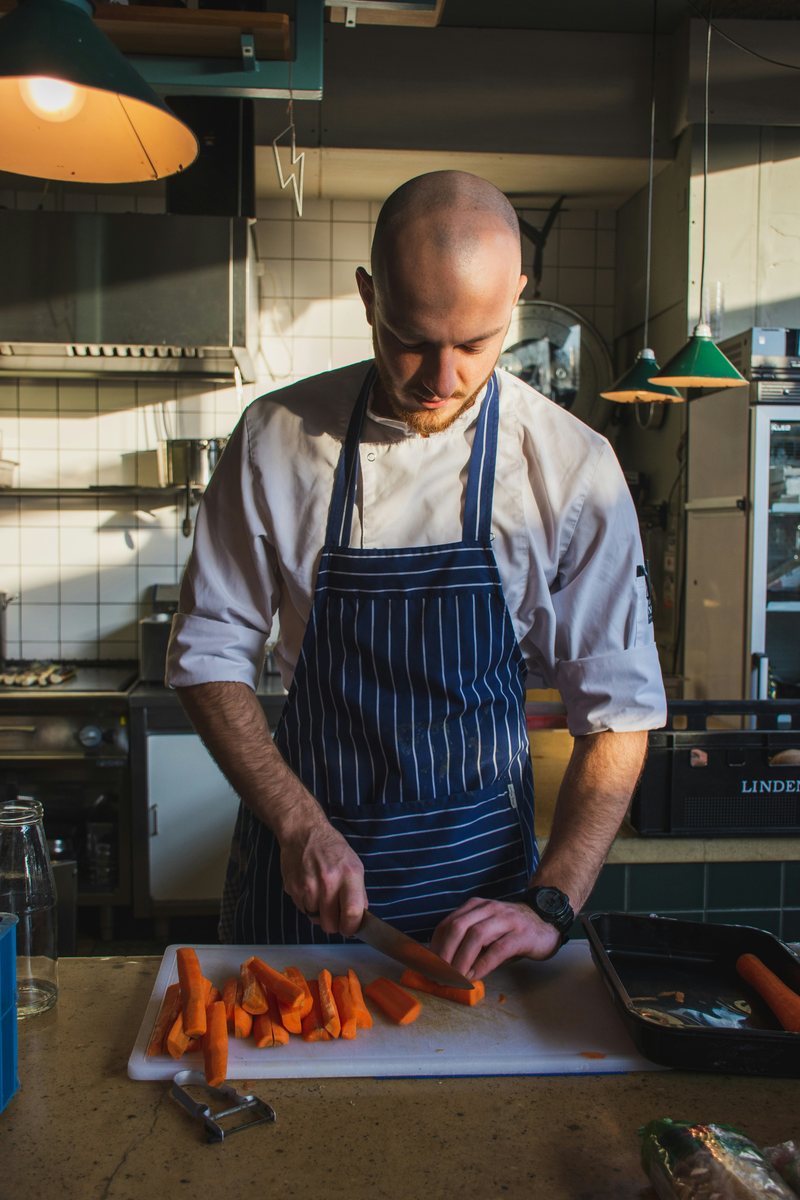
The part that makes many knife cuts awkward is trying to hold something round while cutting it into smaller pieces. Give yourself a flat surface before worrying about the name of the cut.
- Wash the vegetables or herbs. Use a clean knife and a steady board. If the board slips, put a non-slip mat or clean, damp folded cloth underneath it.
- Give round vegetables a flat side before making smaller cuts. Cut a thin slice from a carrot, for example, then rest it on that side. The little offcut might even be a treat for the chef.
- Curl the fingertips of your guiding hand away from the blade. Cut slowly, using a smooth slicing motion rather than pushing straight down. A knife will always cut better when sliced rather than forced downwards.
If the board or knife was used for raw meat, fish, or poultry, clean it thoroughly before preparing anything that will be eaten without further cooking. The Food Standards Agency has guidance on avoiding cross-contamination.
Always keep your fingers clear of the blade, take your time, and stop if the ingredient slips. The only thing on your plate that should look bloody is a blue steak.
Chopping: when the shape is flexible
“Chop” is the least fussy instruction here. The pieces should be similar enough to cook together, but they do not need neat edges. “Roughly chopped” usually means larger pieces. “Finely chopped” means smaller ones that will spread through a sauce or dressing.
Take a pepper as an example. Remove the core, cut the pepper into sections that lie flat, then cut a section into strips. Turn the strips and cut across them. If a few pieces look much larger than the rest, cut those again. Repeatedly attacking the whole pile only makes the smaller pieces smaller.
Dicing: planks, sticks, then cubes
Most tidy knife cuts follow the same sequence: planks → sticks → cubes. Once you can see that progression, “dice” becomes much less mysterious. A carrot is a good place to try it.
- Trim the ends and cut the carrot into short lengths that are comfortable to hold. Slice a thin piece from one side so each length rests flat on the board.
- With that flat side down, cut lengthwise into planks of similar thickness. For a small dice, make the planks small and even.
- Lay one or two planks flat and cut them lengthwise into sticks about the same width. Keep the stack low enough to remain stable.
- Turn the sticks a quarter turn and cut across them at the same spacing. The result should be roughly cube-shaped pieces.
For a medium or large dice, make thicker planks and sticks before the final cuts. The size is decided at the plank stage. If the planks are uneven, the cubes will be too; that is the point to slow down.
Julienne: keep the sticks, skip the cubes
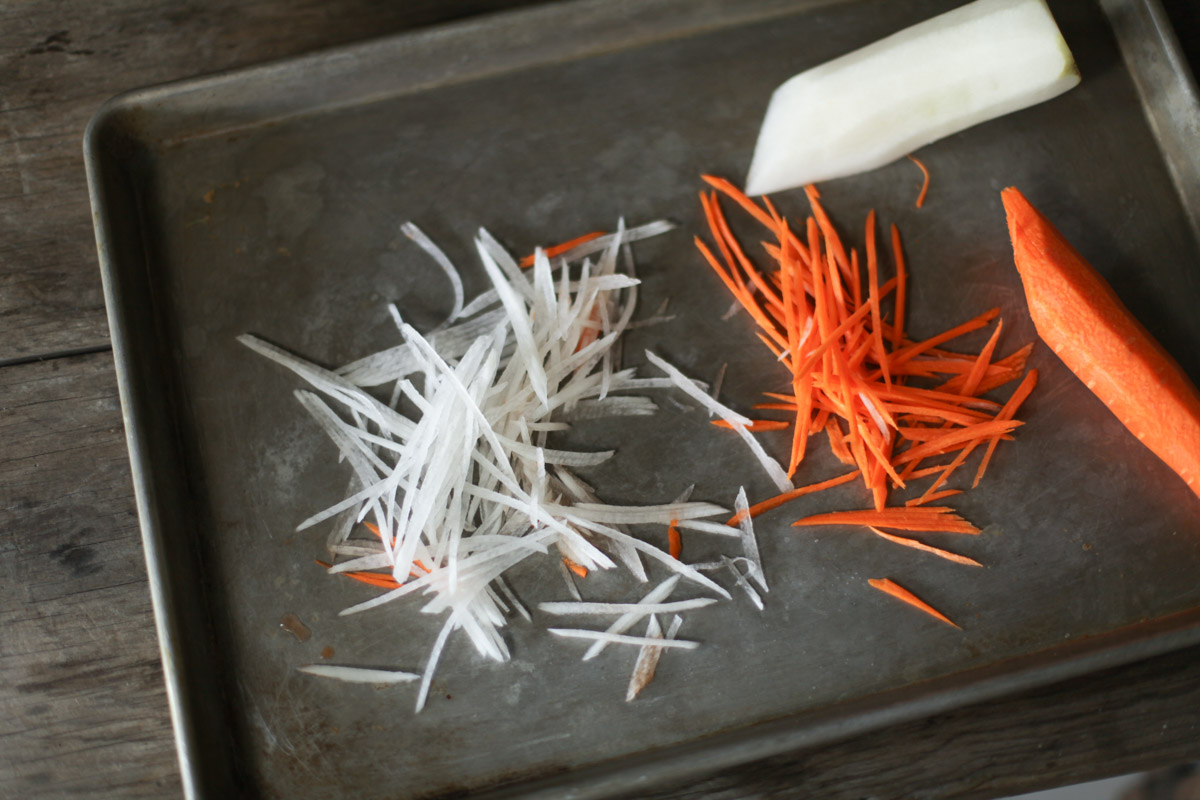
Julienne follows the same process, only thinner. Start with a short piece of carrot resting on its flat side. Cut lengthwise planks, then cut each plank into narrow sticks. Leiths uses slices around 1–2 mm thick for a fine julienne. You are making matchsticks, so there is no final cross-cut.
Brunoise sounds more complicated than it is. Line up a few of those matchsticks and cut across them at roughly the same spacing as their width: you now have tiny cubes. The trimmed edges can go into a soup or another dish where their shape does not matter.
Mincing: small enough to spread through the dish
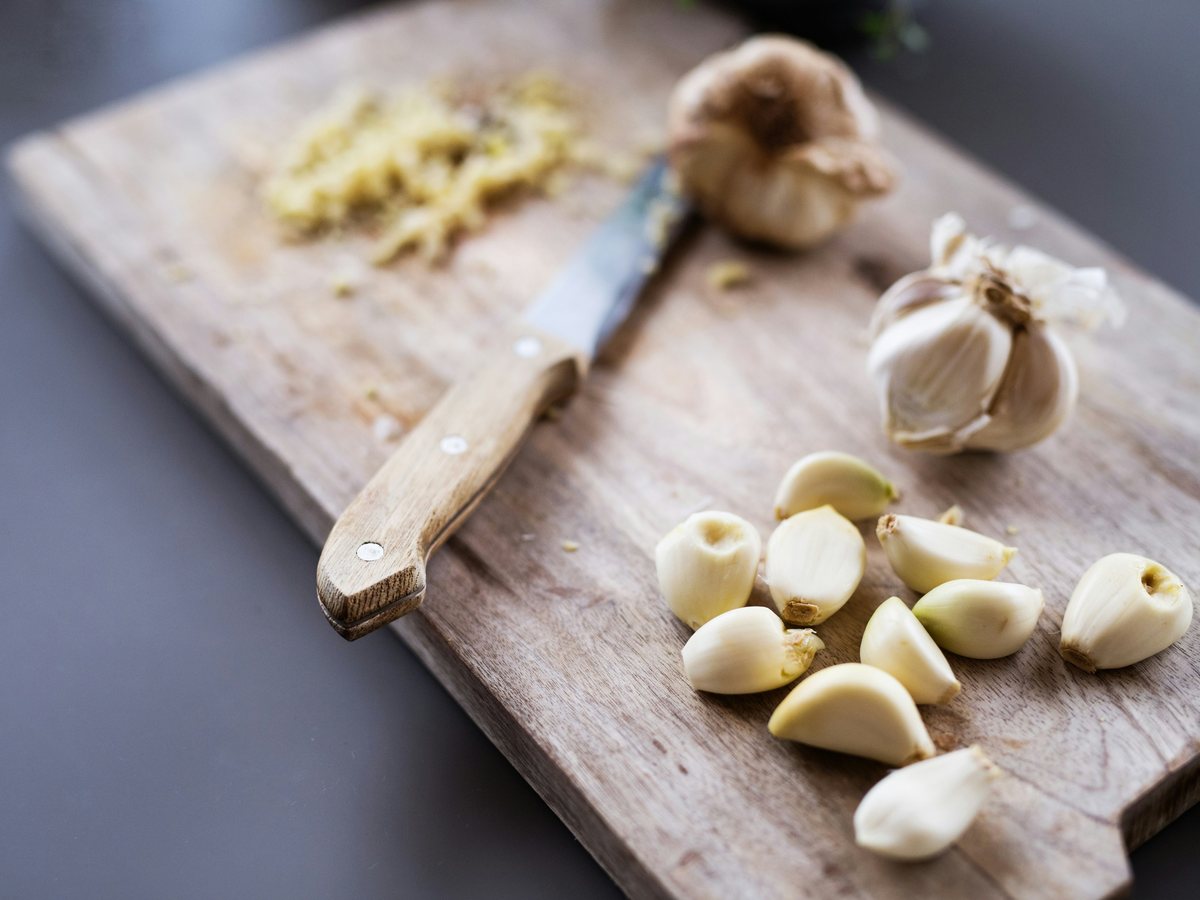
Garlic is a familiar example of a mince. Peel a clove, split it lengthwise, and put a cut side on the board so it stays still. Slice it thinly, gather the slices, and cut across them. Gather the pieces again and cut through anything that still looks large.
There is no cube to aim for here. You are done when the garlic is fine enough to mix through what you are making. A cold dressing, for example, will show up larger pieces much more clearly than a sauce that cooks for an hour.
A microplane can quickly make finely minced or puréed garlic. Keep your fingertips clear of the grating surface.
Chiffonade: ribbons from leaves
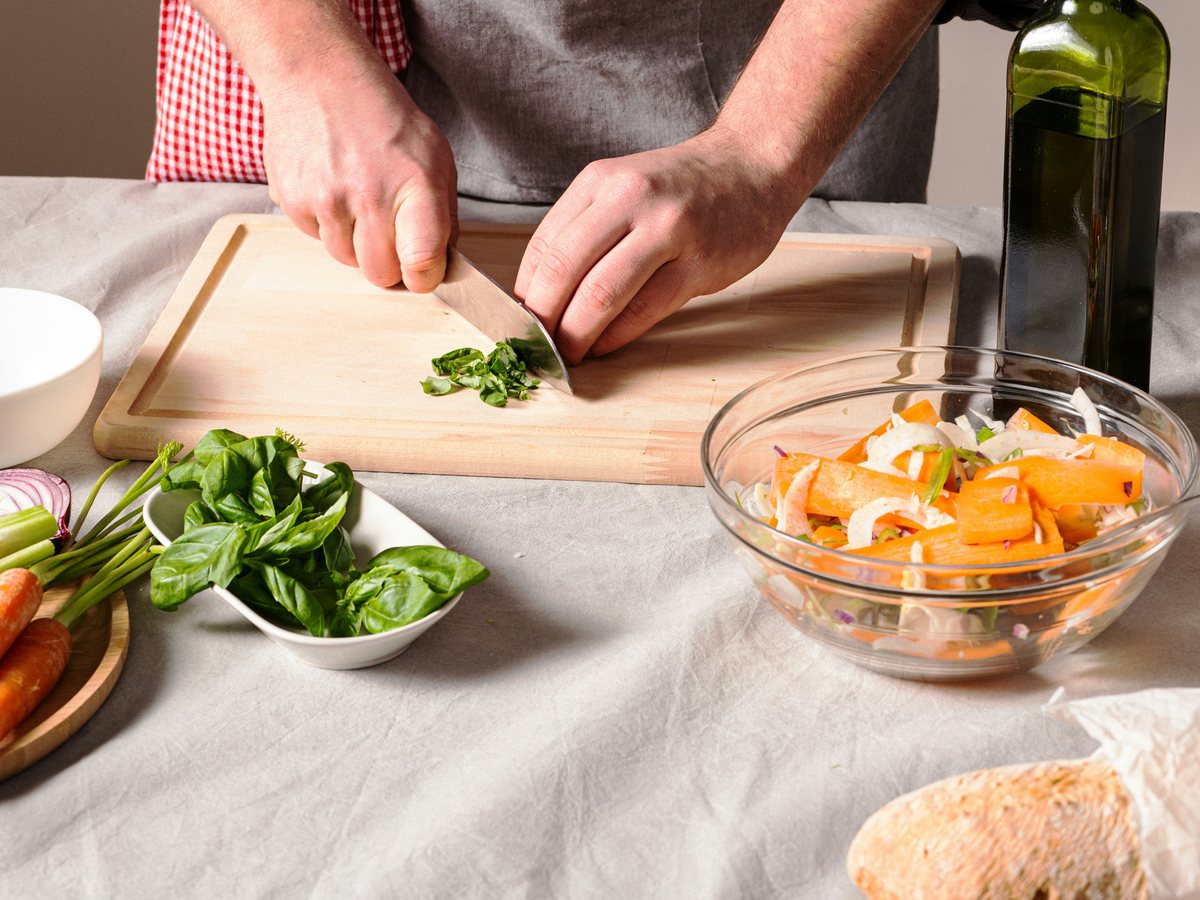
Leafy herbs need a different approach. Stack a few clean basil or mint leaves, roll them gently, and slice across the roll into narrow ribbons. Unlike a fine chop, you can still see the shape of the leaf in the finished dish. Cut them shortly before you need them and stop once the ribbons are the width you want.
What if the recipe does not say how big?
Look at what happens next. Vegetables going into a quick stir-fry usually need to be thinner than those going into a long-cooked stew. An onion meant to melt into a sauce needs a finer cut than one you want to see and bite into later. The recipe photograph, if there is one, can help too.
When none of those clues settles it, choose a size and keep it consistent. If the first few pieces are uneven, sort out the larger ones and cut them again. You can note the size that worked for the next time you cook the recipe.
Try it once with a carrot
Divide one carrot into three short lengths. Roughly chop the first, make a small dice from the second, and julienne the third. Put the piles side by side. You should be able to tell which is which without a label.
If the dice varies a lot, look back at the thickness of the planks and sticks. If the matchsticks vary, start with thinner, more even planks. The offcuts can go into a soup or stock. You are learning how the cuts are built, and you get dinner prep out of it as well.