
Tools and technique
Hone or sharpen: what does your knife need?
Use a simple food check to decide when to hone a knife, when to sharpen it, and when to ask for expert help.
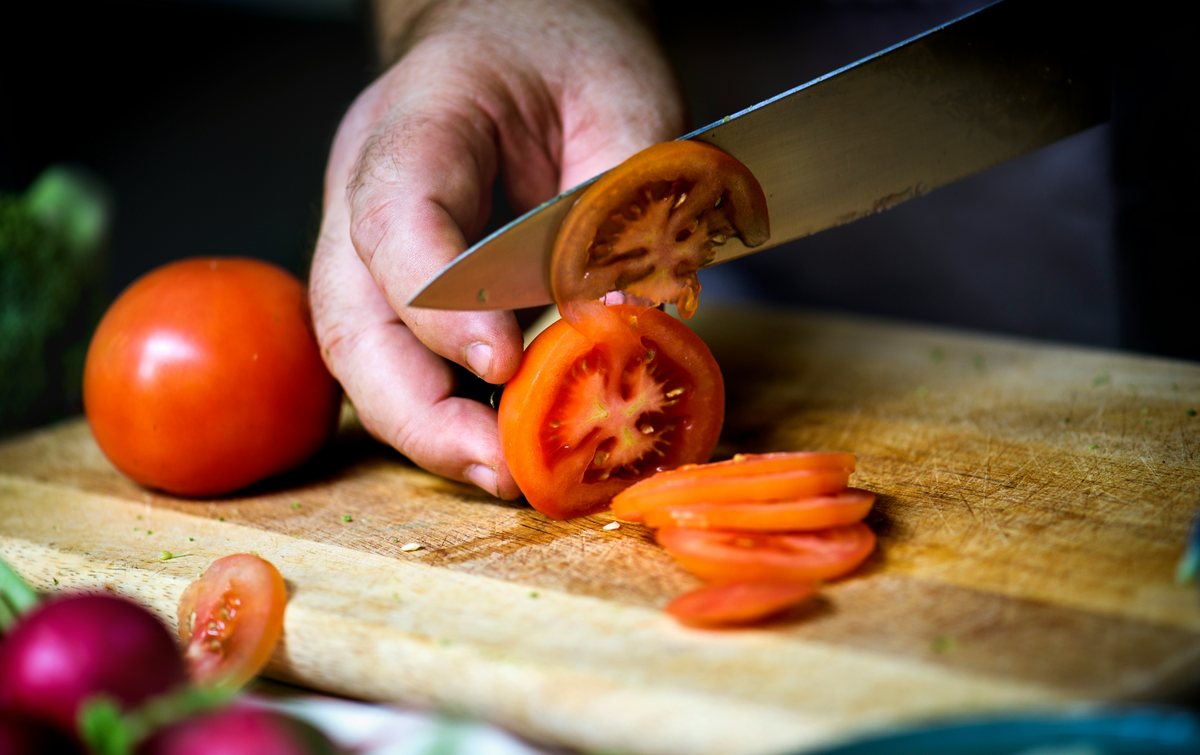
The tomato is there, the knife looks fine, and somehow the blade slides over the skin instead of cutting it. It is tempting to pick up a honing steel and keep going until something changes. But a steel and a sharpener do different jobs, and neither can rescue every knife.
Here is how to work out what is going on before you buy anything or grind away more metal than you meant to. Sharpen away from food, then clean the work surface and wash and dry the knife before cooking. Fine metal particles can be left behind, and you do not want them in your meal.
A quick diagnosis
| What you notice | First thing to try | What it may mean if that fails |
|---|---|---|
| A previously good knife has started to drag on tomato skin | Hone it, if the maker says that knife can be honed with your tool | The edge may need sharpening |
| The knife squashes herbs or slips over a tomato even after honing | Sharpen it or have it sharpened | Honing will not create a new edge |
| There is a visible chip, bent tip, or loose handle | Stop using it and ask a qualified repairer or the maker | A routine home sharpening session is not enough |
| Only a serrated bread knife is struggling | Check the maker's care advice | An ordinary straight-edge stone or steel is unlikely to be the right tool |
The Wüsthof UK sharpening guide explains the difference: honing maintains an edge; sharpening removes metal to form a new one. A tomato is a useful everyday check, though a single poor cut can also come from a damaged tomato or awkward technique. Do not test sharpness by running a finger along the blade.
Honing keeps an existing edge working
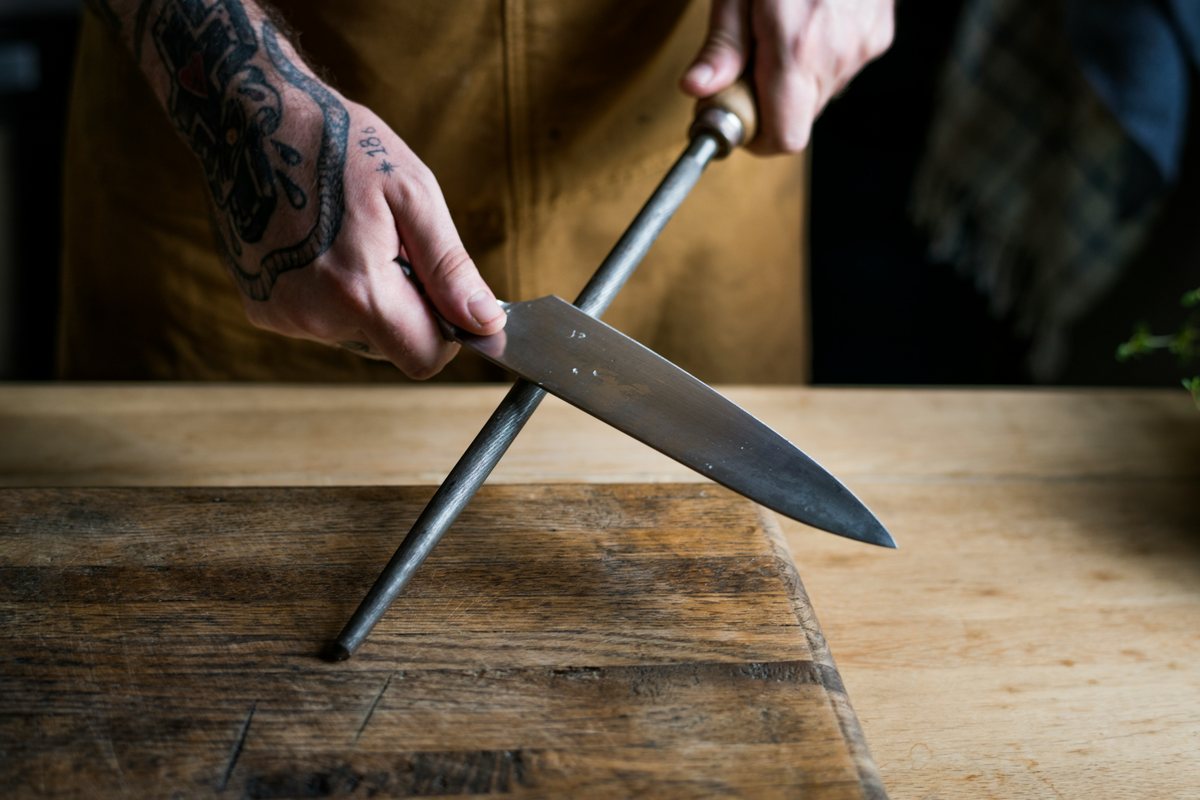
A honing rod is for maintenance. It can help a sound edge cut more cleanly again, but it will not turn a truly blunt or chipped blade into a sharp one. It also needs to suit the knife: a hard or delicate blade, a serrated edge, and a damaged edge may need different treatment.
For a knife and rod that the manufacturer says are compatible:
- Put the rod tip down on a non-slip surface, with the handle upright. Keep the hand holding it above the guard.
- Place the heel of the knife near the top of the rod. Match the edge angle recommended for your knife rather than guessing a universal number.
- Draw the blade down and towards you so the contact moves from heel to tip. Keep the pressure light and the motion controlled.
- Repeat on the other side, alternating a few passes. Wash and dry the knife before using it on food.
The point-down setup comes from Wüsthof UK's care instructions. The rod should stay still; there is no need for a fast, airborne performance over the worktop. If the edge still struggles, more forceful passes are unlikely to help.
Sharpening makes a new edge
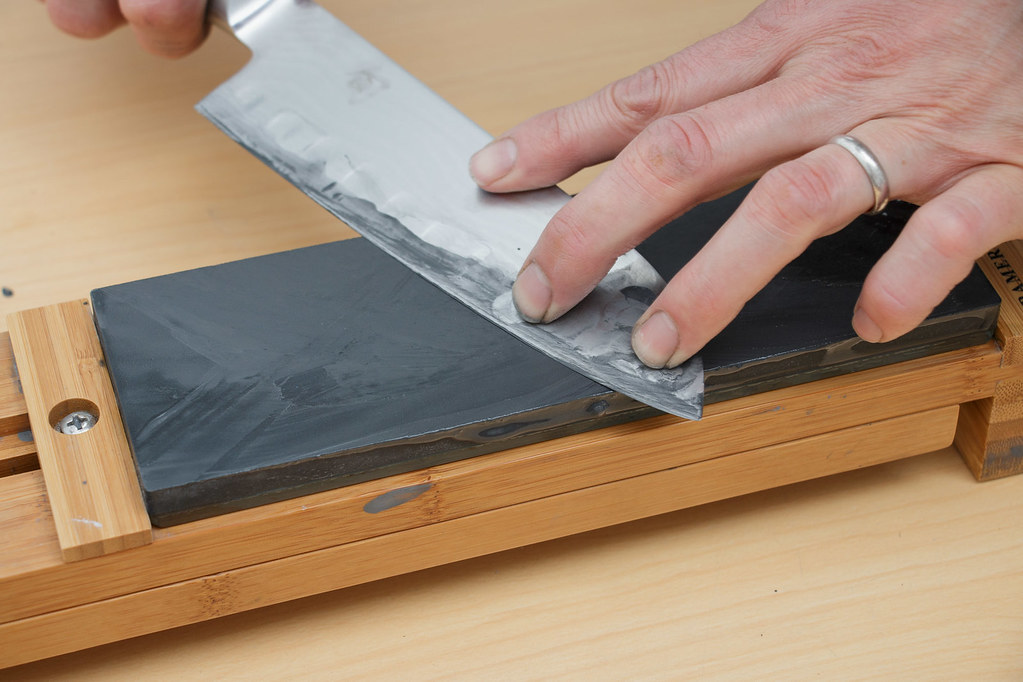
A whetstone or suitable sharpener removes a small amount of metal. That is useful when honing no longer brings the knife back, but it is also why repeated sharpening for every slightly awkward cut is unnecessary.
A stone is learnable, though it needs more care than a quick pass over a steel. Different stones are prepared differently: some soak, some only need water on the surface. Knives also have different edge geometry. Read the instructions for both before starting. Secure the stone, work at the angle specified for the knife, and use the stone's finer side or finishing step as instructed. Wüsthof UK publishes knife-specific guidance; follow the instructions for your own blade and stone.
If you do not know the blade type or cannot hold a steady angle, a reputable sharpening service is a sensible option. Tell them what knife you have and ask whether they can preserve its intended edge. For serrated knives, check the maker's guidance first; many need specialist sharpening.
Check the result on food
Try a controlled slice through a ripe tomato or another ingredient you actually cook with. A sound, suitable knife should start the cut without you having to press down hard. Stop if the knife still slips; more pressure makes the task less predictable.
Also check the rest of your setup. A moving board, a wet handle, or food that rolls around will make a sharp knife feel harder to control. The knife cuts guide shows how to give round vegetables a flat side and keep the board steady.
Keep the edge for longer
Use a stable cutting board, wash the knife by hand, and dry it promptly. Store the blade so it cannot knock against other utensils or be grabbed accidentally. These ordinary habits matter more than a complicated sharpening schedule.
The useful question is not “How many weeks since I sharpened it?” It is “Does it still cut cleanly, and can honing bring it back?” That keeps maintenance tied to the actual knife in your kitchen.