
Techniques
Why does food stick to my stainless steel pan?
Learn how heat, moisture, and timing affect browning and release in a stainless steel pan.
A stainless steel pan can make lovely browned food and then, apparently, refuse to let it go. You try to turn a piece of chicken or tofu, half of it stays behind, and the advice to “just use more oil” does not seem very helpful.
Usually there is more than one thing going on: the pan was not ready, the food was wet, or it was moved before its surface had browned enough to release. The trick is knowing when to wait, when to turn, and when to lower the heat.
The short version
- Warm the empty pan over low to medium heat.
- Add a small amount of suitable oil, then add food that is reasonably dry on the surface.
- Leave enough space around each piece and give it time to brown.
- Try a gentle lift with a thin spatula. If it resists but is not burning, wait a little longer.
- Adjust the heat as you cook. A pan that was right for the first minute can become too hot later.
Le Creuset UK's stainless steel guide recommends preheating, waiting for the oil to shimmer, and avoiding overcrowding. Good Food's pan review also notes that food releases more readily after a proper sear. Those are useful habits, but they are not a promise that every food will behave alike. Delicate fish, sugary marinades, and very wet vegetables need more care.
Start with the pan and the food
Give the pan a little time to heat at a moderate setting. Oil added to a cold pan and food added immediately afterwards can leave the food sitting against metal while everything warms up. On the other hand, heating an empty pan at full power can overshoot before you have even started.
If you use the water-drop check, do it only on an empty, oil-free pan: a tiny drop should move around rather than vanish instantly. Wipe away the water before adding oil. The visual cue is less important than learning how your own hob and pan respond. If the oil smokes or food blackens quickly, lower the heat or take the pan off it briefly.
Pat the food's surface dry with kitchen paper where appropriate, particularly a piece you want to sear. Moisture must evaporate before that surface can brown. Do not crowd the pan: several damp pieces close together can steam one another. If there is too much food for a single layer with space between pieces, cook it in batches.
Let the first side do its work
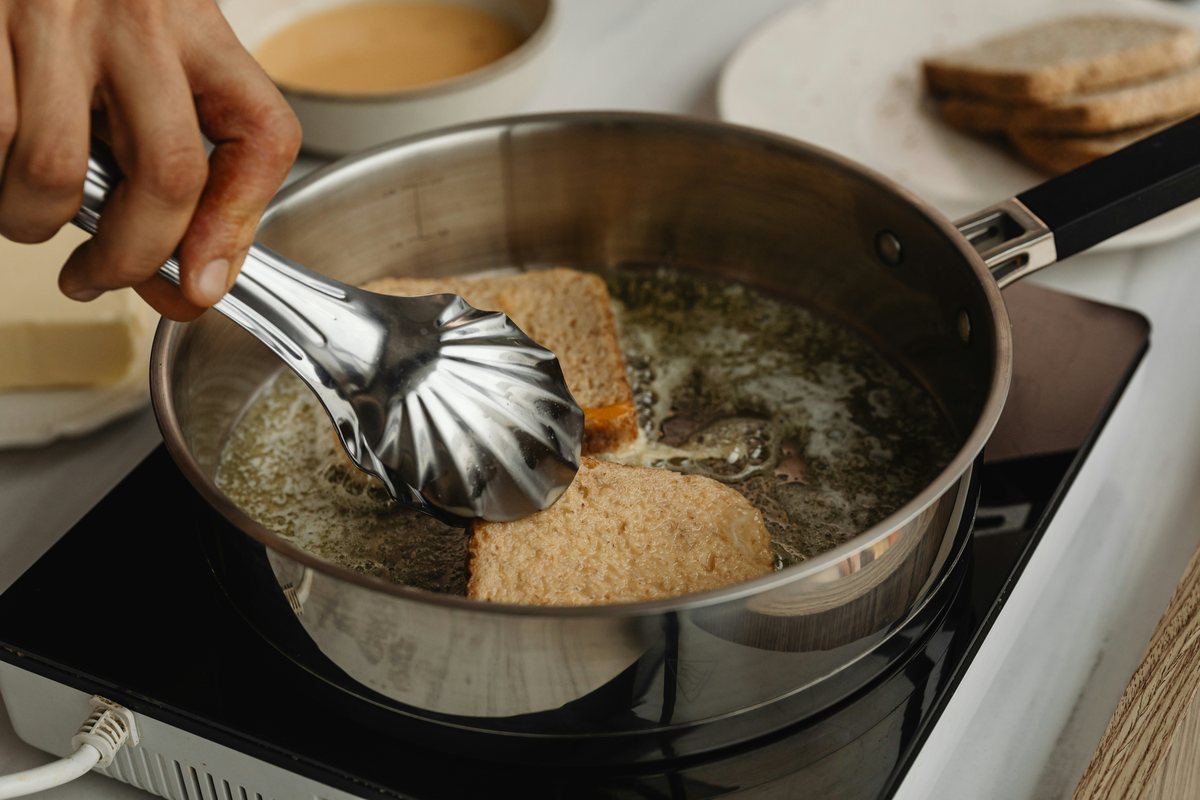
Once the food is in, leave it alone for a moment. The first tug with a spatula is a check, not a contest. If the food is still attached and the surface is browning normally, give it more time. When it releases with a gentle lift, turn it and continue cooking as the recipe requires.
This advice has a limit. If you see smoke, smell burning, or find the exposed edges blackening, do not wait for a magical release. Lower the heat or take the pan off it. Once the food is out, clean the pan if the residue has burned.
A thin metal spatula suited to the pan can help you get under a browned piece without tearing it. Keep your hand away from hot steam and oil, and use the utensil gently enough that it does not gouge the pan.
Brown bits or burnt bits?
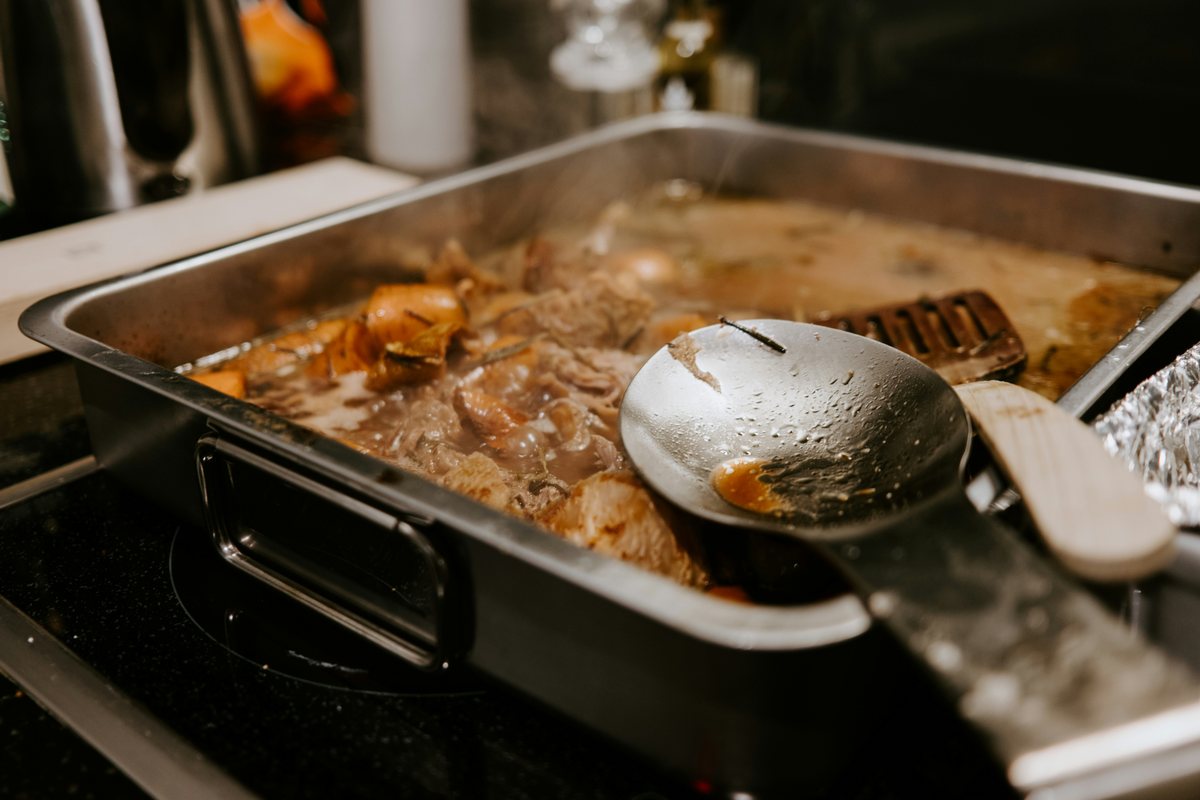
Fond is the savoury layer of browned cooking juices and small food particles left on the bottom of a pan after searing. It should be brown and smell appetising, rather than black and bitter. Leave it in the pan while you finish cooking; when you are ready to use it, follow the small pan sauce recipe.
When the residue has burned
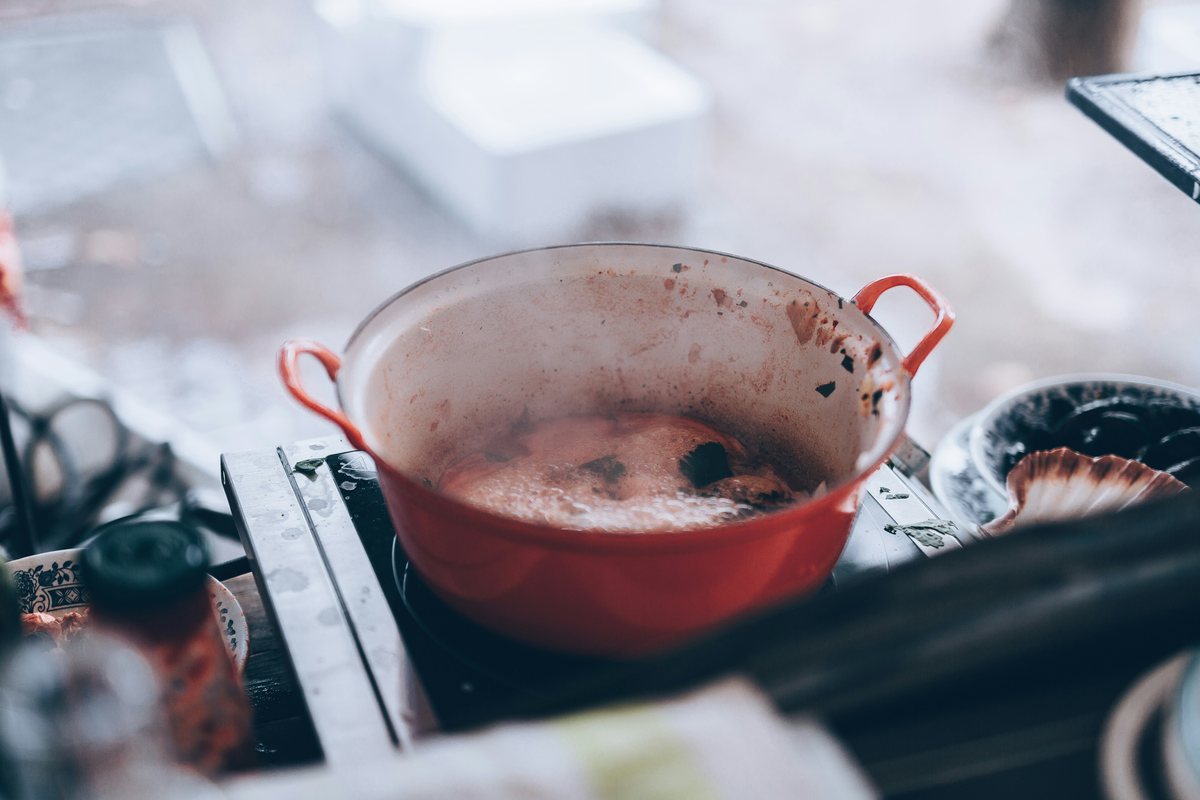
If the marks are black and smell bitter or acrid, the pan has become too hot. Lower the heat, set the cooked food aside, and clean the pan before the next batch. Do not keep waiting for the food to release, and do not save blackened bits for a sauce.
If it keeps happening
Check the pattern rather than turning the heat up automatically:
| What happens | Likely adjustment |
|---|---|
| Food sticks immediately and never browns well | Preheat a little longer; dry the surface; allow space |
| Outside goes dark while the centre is unfinished | Use less heat or a shorter initial sear, then finish as the recipe directs |
| A sugary marinade burns onto the pan | Remove excess marinade before searing, or use a method suited to that recipe |
| Food browns well but tears when turned | Wait for a gentler release and use a thin spatula |
| The pan is clean after every attempt but still difficult | Practise with a forgiving ingredient before trying delicate fish |
Stainless steel takes a little practice because you can see what is happening on the metal and have to respond to it. Once the heat, moisture, and timing make sense, it becomes easier to tell when the food is ready to turn.