Basic recipes and techniques
A pan sauce from the browned bits
Make a small stock-based pan sauce from savoury browned bits, then adjust its thickness and flavour.
Fond is the layer of browned cooking juices and tiny pieces of food that stick to the bottom of a pan when you sear an ingredient. Those savoury bits dissolve into liquid and give a pan sauce much of its flavour. They should be brown and smell appetising; black, bitter residue is burnt food, not fond to save.
After you sear mushrooms, chicken, or another savoury ingredient, leave the fond in the pan while the food rests. Add stock, scrape up the bits, reduce the liquid, and finish it with butter.
This version is deliberately small: enough for two plates, made in the same pan while the cooked food rests. It uses stock instead of wine, so you do not need to open a bottle to make it.
If food is tearing or burning before it releases, start with the stainless steel pan guide to adjust the heat, moisture, and timing.
What you need
Makes: about two small servings of sauce
Time: roughly 5–8 minutes after the main food is cooked
- A frying pan with brown fond from safely cooked mushrooms, chicken, or another savoury ingredient
- About 1 teaspoon of the cooking fat left in the pan
- 1 tablespoon finely chopped shallot
- 100 ml unsalted stock that suits the main dish
- 1 teaspoon Dijon mustard
- 10 g cold unsalted butter, cut into small pieces
- 1 teaspoon lemon juice, plus more only if needed
- Salt and black pepper to taste
Use a pan that can go back on the hob. If the browned bits are black or smell bitter, clean the pan and make a simple stock sauce in it instead.
Make the sauce
- Move the cooked food to a plate. Keep it as the recipe for the main dish directs. Pour off excess fat, leaving roughly a teaspoon and the brown bits in the pan.
- Soften the shallot. Put the pan over medium-low heat. Stir the shallot in the remaining fat for about a minute, until softened but not browned hard. If the pan is very hot, let it cool briefly first.
- Deglaze. Pour in the stock. It will bubble. Scrape the bottom gently with a wooden spoon or suitable spatula to dissolve the brown bits into the liquid.
- Reduce. Simmer until the liquid has reduced to roughly half its starting volume. Stir and watch the pan rather than relying only on a timer; a broad pan can reduce quickly.
- Finish off the heat. Turn the heat off. Stir in the mustard, then swirl or whisk in the cold butter a little at a time until the sauce looks glossy. Add the lemon juice, taste, and only then add salt and pepper as needed.
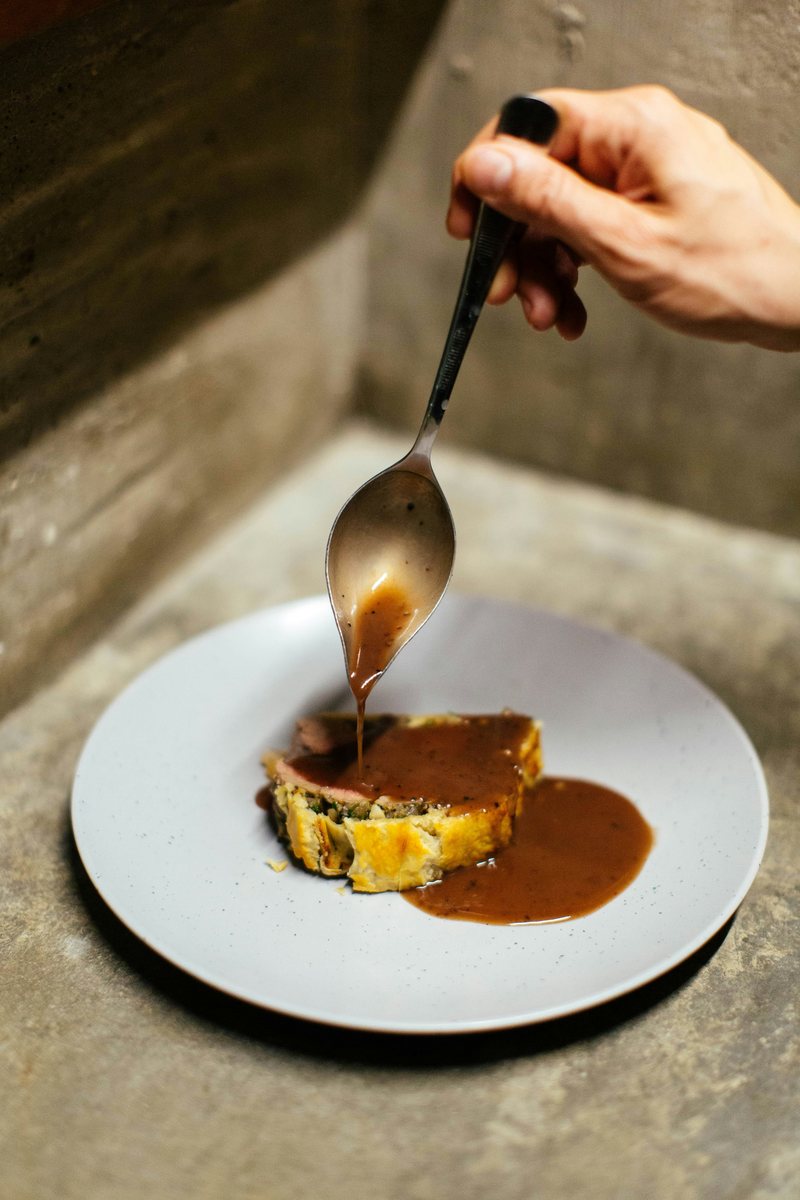
- Serve promptly. Spoon the sauce over the main dish. If it becomes too thick while you plate up, loosen it with a teaspoon of warm water or stock and stir.
The sequence is the useful part: make fond, deglaze, reduce, then finish. The butter goes in after the reduction so it is less likely to separate. If it does look greasy, the split-sauce guide has a short recovery path.
Adjust it to the pan you have
If the main ingredient was mushrooms, use vegetable or mushroom stock. If it was chicken, chicken stock makes sense. A salty stock or well-seasoned fond may need no extra salt, which is why the recipe starts with unsalted stock.
For a sharper sauce, add a little more lemon after tasting. For a milder one, start with half the mustard. If the fond is already strongly flavoured with herbs or spices, you may not need either. Try the basic version once before turning every knob at the same time.
Want to use wine? Add a modest splash before the stock, let it reduce, then continue. This changes the flavour and requires another tasting step; it is an option rather than an essential part of the base recipe.
If the sauce is too thin, thick, or bitter
| What happened | What to do |
|---|---|
| It tastes good but is too thin | Simmer a little longer before adding the butter |
| It is too concentrated or salty | Add a little unsalted stock or water, then taste again |
| The butter floats in oily patches | Take it off the heat and try the steps in the split-sauce guide |
| It tastes bitter or burnt | Start again in a clean pan; reduction will concentrate the bitterness |
A pan sauce is flexible because the fond changes every time you cook. Once you know which stage to adjust, you can make the amount and flavour suit the food on the plate.